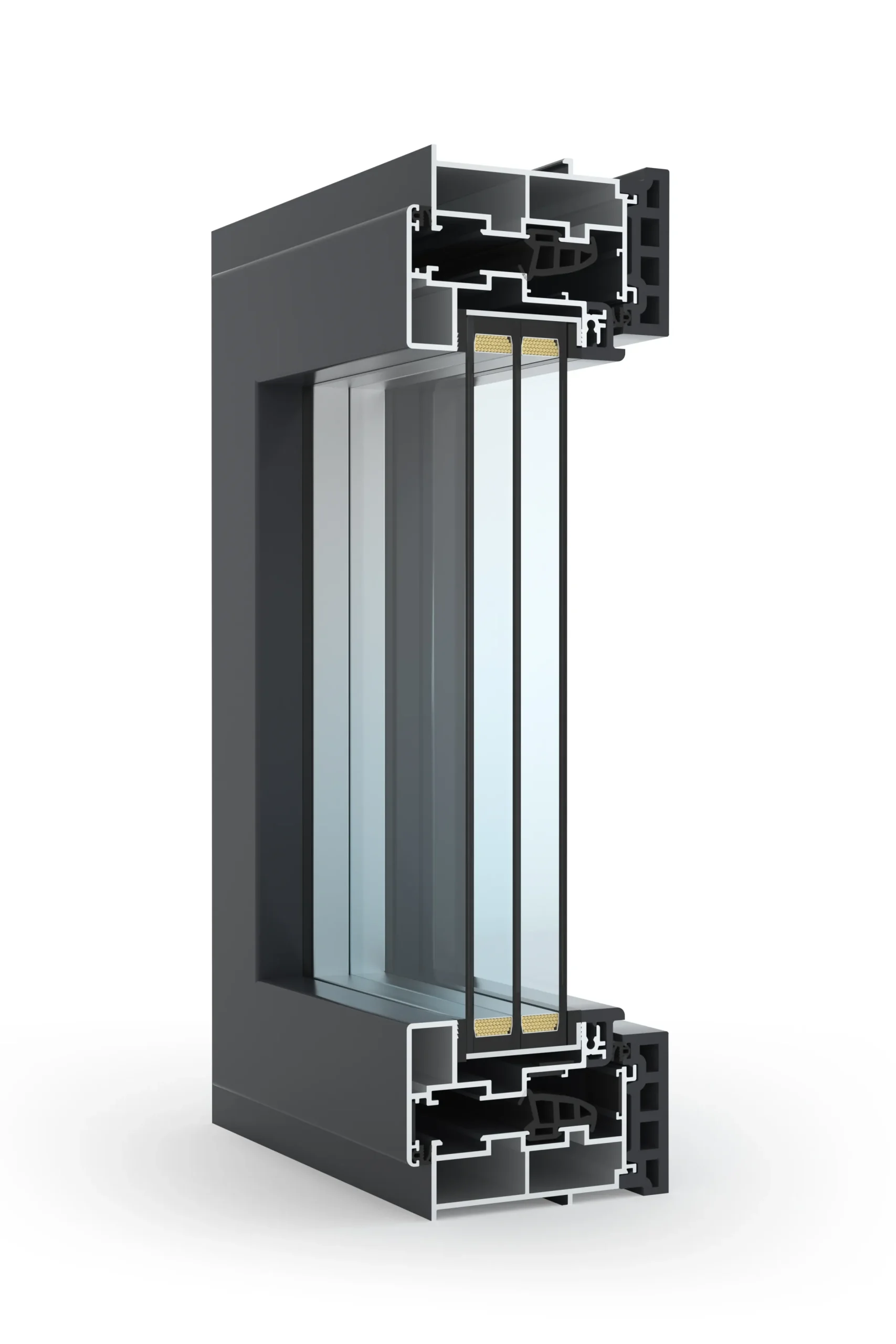
In 2015, with the promulgation of the Code for Fire Protection Design of Buildings (GB 50016-2014), the design of energy-saving exterior windows caused great confusion for many developers and design institutes. With an aluminum window system, fire-integrity performance in principle can only be achieved by sacrificing some energy-saving performance, so adding energy-saving configurations on top of the original energy performance of the complete window became the way to design fire-resistant energy-saving window systems, which undoubtedly raised the production and installation cost of exterior windows considerably. The integrated aluminum alloy profile of the integrated aluminum alloy energy-saving window has high inherent structural strength, and its external insulation system means that fire-resistant structural components used to reinforce the aluminum alloy and insulating glass do not affect the energy-saving system architecture of the complete window. It is a genuine energy-saving fire-resistant window system whose complete window meets fire integrity on top of the original energy-saving system (we can provide test reports proving both fire resistance and energy-saving performance), and the incremental cost is limited to the measures and related materials needed to achieve the fire integrity of the complete window, providing designers and users with a real and achievable fire-resistant energy-saving aluminum alloy window system.